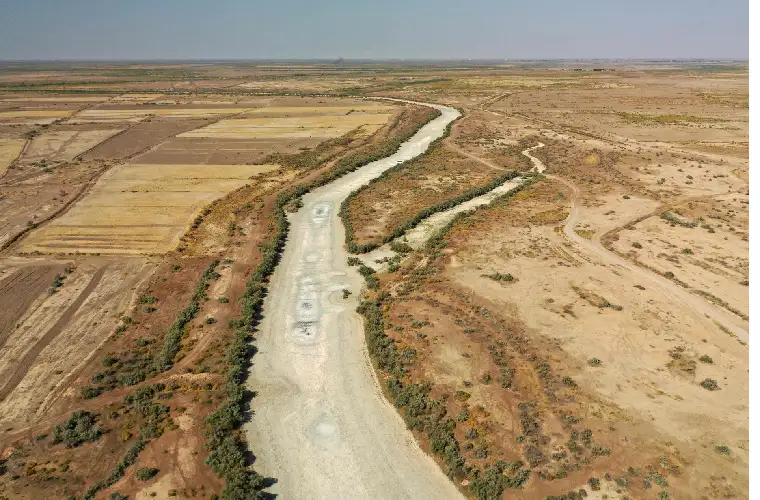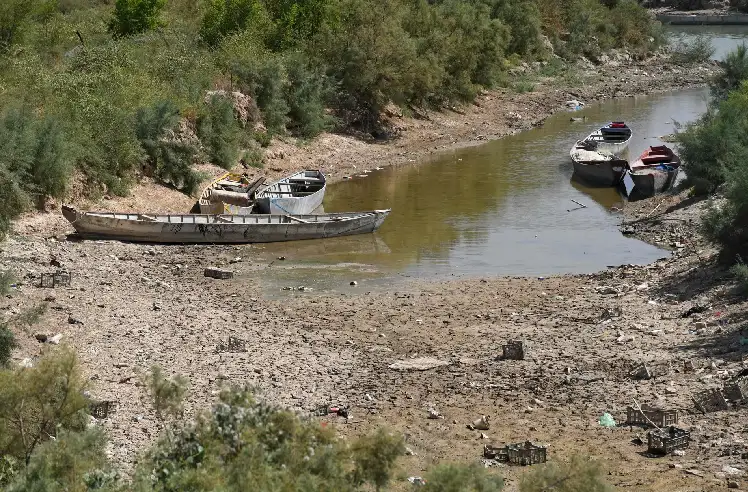

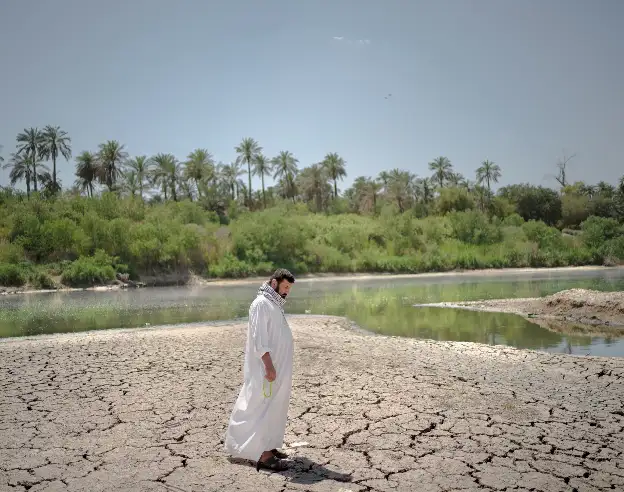


Iraq’s legendary Tigris River, which fed Mesopotamian civilizations for millennia, is now in decline. The Telegraph has looked at the negative statistics surrounding the river.
The river has lost most of its volume in the past three decades. Thanks to Turkish dams, the amount of water reaching Baghdad has been reduced by 33%, while rainfall in Iraq has decreased by 30%. The country is experiencing its worst drought in almost a century, and demand for fresh water is predicted to exceed supply by 2035. This summer, the river was so low that people were able to cross it on foot.
The pollution situation is no less dire. After Operation Desert Storm in 1991, Iraq’s water treatment infrastructure was destroyed and has never been fully restored. Today, only 30% of urban households in the south and center are connected to the sewage system, while only 1.7% in rural areas are. In 2018, 118,000 people were hospitalized in Basra after drinking contaminated water. A 2022 survey found that water quality in many areas of Baghdad was rated “poor” or “very poor.”
The situation is getting worse because the two problems are mutually reinforcing. As experts explain, water quality depends on quantity. As the river’s volume decreases, the concentration of pollutants increases.
About 18 million Iraqis live in the Tigris basin. The river provides irrigation, transportation, industry, energy, and drinking water.
The numbers are precise: the Tigris is dying, and if urgent action is not taken now, this cradle of ancient civilizations could turn into a desert.