
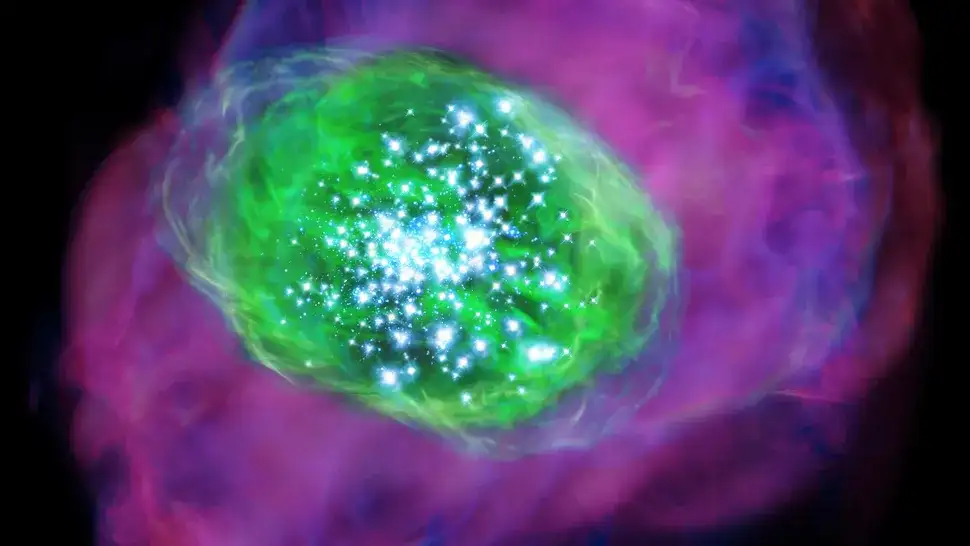


An international team of astronomers using the James Webb Space Telescope has discovered a bright, young galaxy from the early universe. It is not the earliest galaxy ever found, but scientists believe it belongs to the first generation of large galaxies to form after the Big Bang.
Because it is so far away, we are seeing it at a time when it was only 1–2 million years old. This “little galaxy” is literally “on a whim,” forming about 165 solar-mass stars per year.
The JWST observations show that galaxies in the early universe are much brighter and larger than previously thought.