
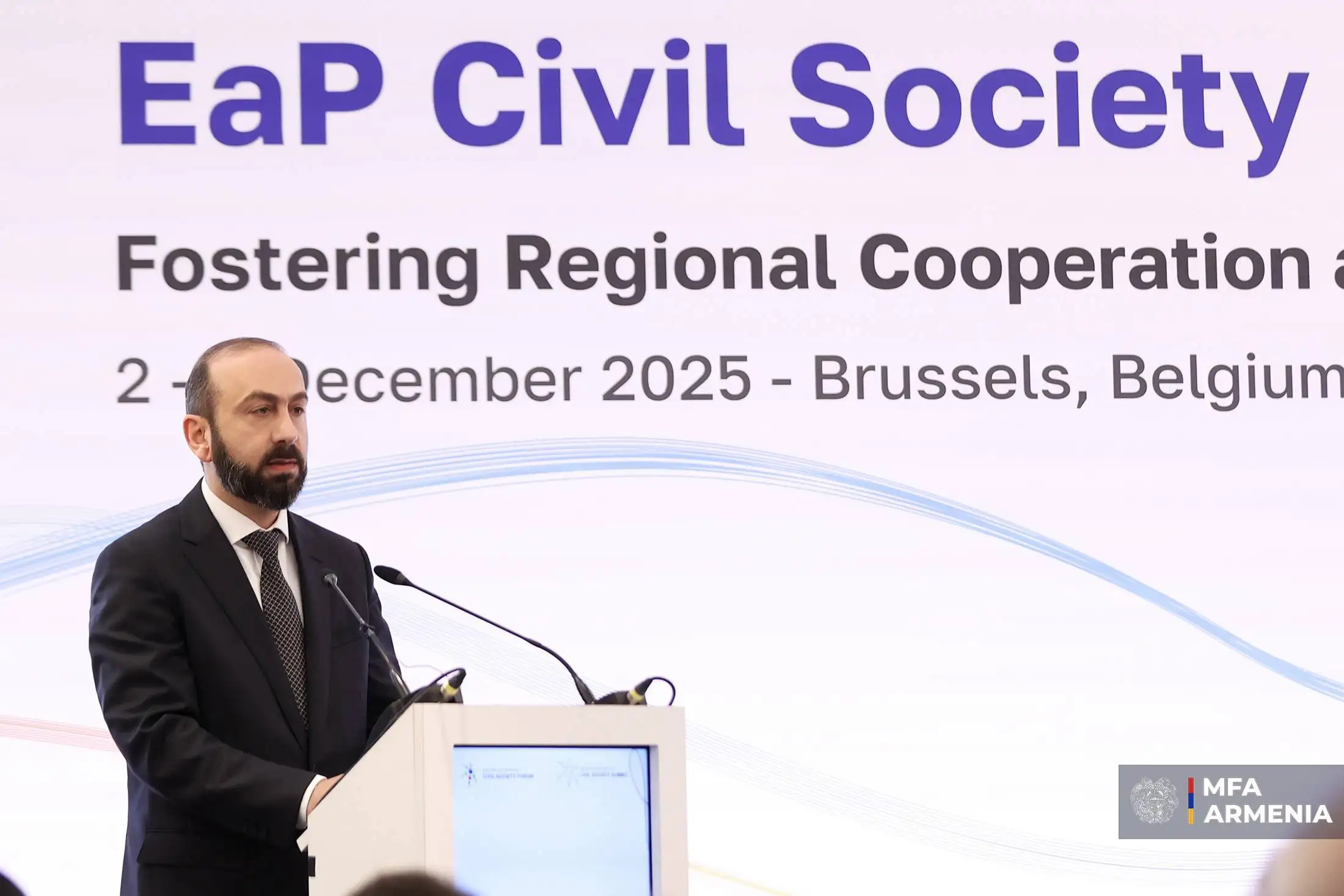


RA Foreign Minister Ararat Mirzoyan delivered a speech at the opening of the Eastern Partnership Civil Society Forum Summit.
"It is a great honor for me to speak again on this platform. Two years ago, when I spoke on this same platform, the South Caucasus was a region marked by uncertainty and insecurity. We talked about peace as if it were a distant goal. The European perspective, while inspiring, often seemed unattainable given existing security challenges. Today, I have returned here to a fundamentally different reality. We are no longer discussing the mere possibility of peace, but rather an established peace. We are talking about European integration not as a wish, but as a matter of law.
Peace in the Region
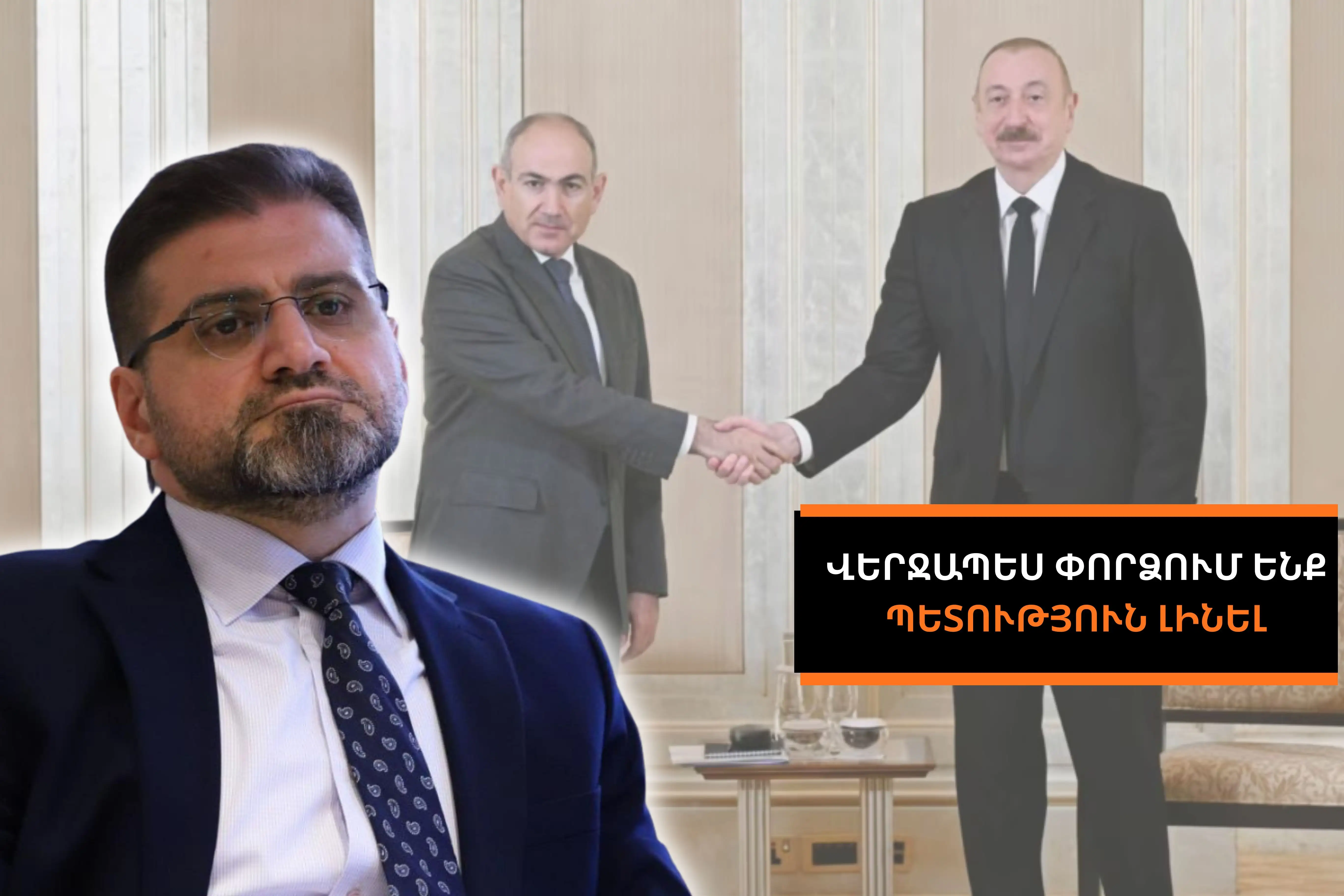
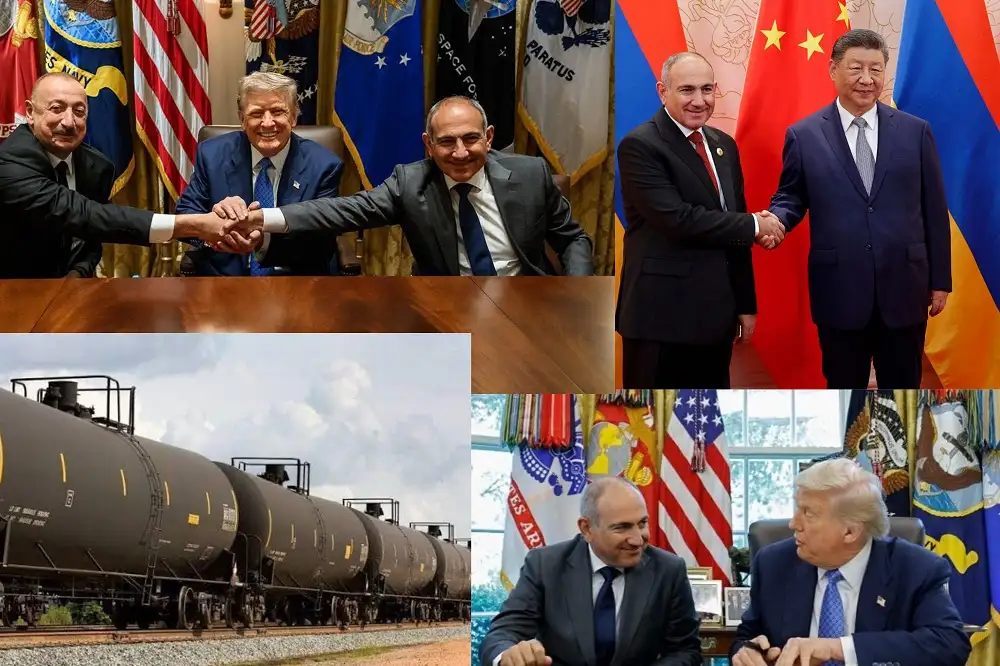
Armenia has long stated that our region needs lasting peace. For years, we have faced skepticism and serious challenges. However, the Armenian government has remained steadfast in its belief that the only guarantee of the country's sovereignty, territorial integrity, and the well-being of its citizens is peaceful coexistence with its neighbors. The signing of the Washington Peace Declaration and the initialing of the peace treaty are historic milestones on this path.
Peace is not simply the absence of war. It is dialogue and the patience to build trust. And now, in this context, I want to call on representatives of civil society in Armenia and Azerbaijan to be guided by this new reality. Governments can sign treaties, but societies build trust. Civil society can create connections between people that treaties cannot. Governments can organize meetings. However, our mandate ends here, and the rest – authentic dialogue and reconciliation – is in your hands. In this regard, I am pleased to note that bilateral, direct dialogues between representatives of civil society were recently held in Yerevan and Baku, respectively.
Armenia-EU Partnership
Over the past years, our partnership with the European Union has developed at an unprecedented pace. While the Comprehensive and Enhanced Partnership Agreement (CEPA) serves as a solid legal basis for the Armenia-EU partnership, we have developed our relations well beyond the CEPA, enriching them with new directions.
Let me highlight the main achievements:
- The launch of the visa liberalization dialogue and the tangible progress recorded within its framework,
- The effective operation of the EU Civilian Mission in Armenia,
- The provision of the first package of assistance under the European Peace Facility,
- The opening of new horizons of cooperation in the security sector with the launch of consultations on security and defence and the accession to the Agreement establishing the framework for Armenia's participation in European Union crisis management operations,
- And finally, the adoption of the "Resilience and Growth" programme and the progress recorded within its framework.
Just yesterday, we adopted the Strategic Agenda for the Armenia-EU Partnership, which complements the APA and elevates our partnership agenda to a strategic level.
But one of the most significant events took place in the spring. The Armenian Parliament adopted the law "On the Launch of the Process of the Republic of Armenia's Accession to the European Union". And here I emphasize the role of civil society, since the law was a civil initiative and clearly reflected the aspirations of Armenia's citizens. The fact that the government and the parliamentary majority supported the initiative shows that we share the same vision of bringing Armenia closer to the EU. This symbolizes that, in Armenia, the path to Europe is not only the government's policy but also society's choice – a process from the individual to the state. This is democracy in action.
Democracy and Resilience
I began my speech today by noting that much has changed since my previous remarks in this format. Indeed, the security situation, regional peace, and the depth of the Armenia-EU partnership have undergone significant transformations. But one thing has not changed throughout all this: the Armenian government's firm commitment to the democratic path, despite all the challenges: war, internal political crisis, foreign interference, and manipulation.
Today, we face new threats. Hybrid attacks—disinformation campaigns, cyberattacks, attempts to manipulate public opinion, and undermine trust in democratic institutions—have become a daily reality. These threats aim to exploit the openness of democratic societies.
But here's what we have learned: when we confront hybrid threats with awareness and civic engagement, they do not weaken democracy, but make it stronger and more resilient. Every attack we successfully thwart, every disinformation campaign we expose, strengthens our democratic "immune system."
And here I want to address the representatives of civil society gathered here today. The state cannot act alone. We rely on you to be the immune system of our democracy. We rely on you to counter disinformation with facts and ensure that our reforms are irreversible. You are the guardians of democratic values.
Ladies and gentlemen, I am confident that bright and promising times lie ahead for the South Caucasus. Through cooperation, our region can unleash its full potential. Civil society has a significant role to play here.
Together, governments, civil society, and citizens are shaping a new era for our country, our region, and Europe. This is a time characterized not by conflict and division, but by peace, cooperation, and shared prosperity."