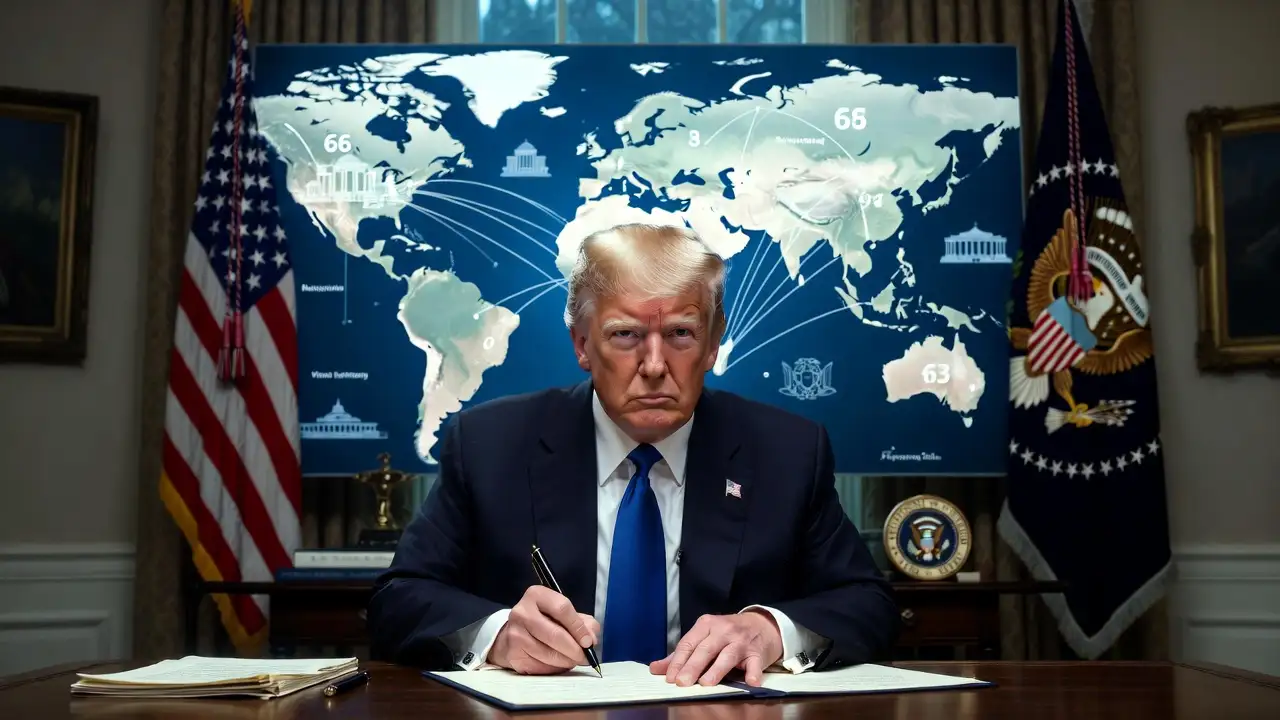

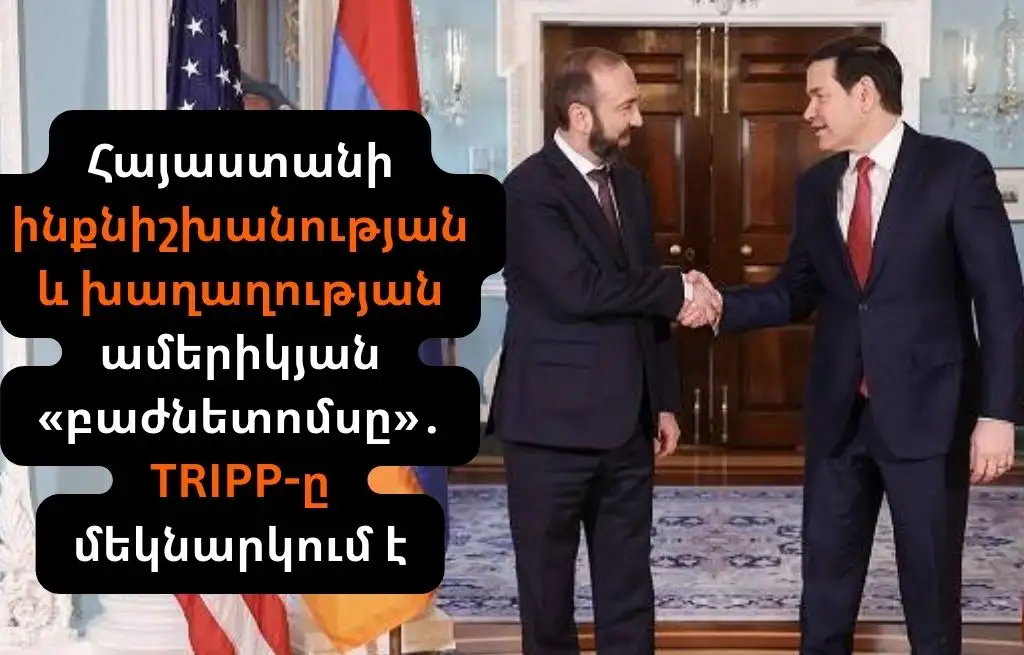


On January 13, Armenian Foreign Minister Ararat Mirzoyan met with US Secretary of State Marco Rubio in Washington. The officials responsible for the two countries' foreign relations signed a joint statement announcing the launch of the de facto “Trump’s Path to International Peace and Prosperity” (TRIPP) project and the publication of the Armenia-US implementation framework for it. It is a document designed to change Armenia’s role on the regional chessboard, shifting from diplomatic declarations to hard business logic and “strategic partnership.”
Multimodality: More than just logistics
At the core of the project is the affirmation of TRIPP as a concept for ensuring "seamless, multimodal transit connectivity." Multimodality implies a synergy of different means of transport: railways, roads, air, and water, where cargo and passengers move in a single chain.
However, in the case of TRIPP, this is not just logistics. This is an attempt to "weld" Armenia into global supply chains. If Armenia was previously considered a dead end, this project turns it into a "smart hub". This means Armenia will not simply provide Azerbaijan with a route to Nakhchivan, but will create terminals where international trade meets Armenian products, opening new markets from Europe to Central Asia.
Strategic "shield": The 74% and 26% formula
According to the signed document, the "TRIPP Development Company," to be established in Armenia and to carry out the central management of TRIPP, is granted the right to build for an initial period of 49 years, after which the partnership can be extended for another 50 years. It is planned that, in the second phase, Armenia's share, with additional government ownership, will increase to 49%.
This is a long-term calculation: in the initial period, when risks are high and investment needs are enormous, the United States assumes primary responsibility and control. By becoming the principal shareholder in the road, the United States assumes a legal and economic obligation to protect the infrastructure. Any encroachment on this road will no longer be an attack only on Armenian sovereign territory; it will be an attack on American public and private property.
This is "economic peacekeeping", where, instead of soldiers, joint-stock contracts serve as guarantors of security, and Armenia, strengthening its own institutions over the years, is gradually restoring its economic weight within the project.
Sovereignty without compromise: "Front and Back" offices
The project's authors have identified a unique solution to the most challenging issue associated with TRIPP: border control. The "front office - back office" model will be used. The "front office" will be managed by private operators (under US control) responsible for servicing, collecting payments, and preliminary document processing. This will ensure the "smooth" and fast functioning of the road. The "back office", as far as can be understood, remains exclusively in the hands of the state bodies of the Republic of Armenia. Final customs decisions, security screening, visa checks, and law enforcement actions will be carried out only by citizens of the Republic of Armenia, in accordance with the laws of the Republic of Armenia.
Thus, Armenia retains its absolute sovereignty while benefiting from U.S. high-tech and digital solutions that enable border crossings in seconds.
"Economization of security": prospects and risks
TRIPP is essentially a model of "economization of security" for Armenia. Instead of relying solely on military alliances or paper guarantees, Armenia is seeking to transfer control of the road running through its territory to an international consortium (US). The goal is simple: to make the security of this road an economic interest of the US.
As stated, this groundbreaking model offers both opportunities and challenges.
The prospects opening up are clearly visible in the document. In particular:
• Security "anchor". The presence of American capital and a 74% stake creates a "deterrence" mechanism. Any regional aggression against the road becomes an attack on American property, which implies a tough response from Washington.
• End of economic isolation: Armenia is moving away from the status of a "transport appendix" and becoming a vital link in the Trans-Caspian trade route, gaining direct access to world markets.
• Institutional ascent: The American management model and technologies will allow the creation of a modern border and customs system that Armenia could not have introduced on its own for decades.
• Prospects for institutionalizing peace: In essence, an attempt is being made to guarantee the exclusion of any further aggression by Azerbaijan against Armenia for at least 49 years. Today, this is encouraging, but conventions are changing rapidly, and shifts in American interest in TRIPP or priorities may also affect the neighbors' moods. In any case, for now, Armenia gets a chance to breathe for some time.
The risks, however, are hidden in the document's footnotes. In particular:
• Geopolitical targeting. Such an active and controlling US "shareholder" presence can be considered a "red line" for other regional players (Russia, Iran), turning Armenia into a new focus of the superpower rivalry.
• Dependence on political will: since the project is called the "Trump Way" and does not yet have strict legal obligations, domestic political changes or deviations in priorities in the US may leave the project on paper, leaving Armenia facing the threats that have been exposed. In other words, Yerevan's task will be to ensure that this project becomes a long-term priority of the state, not the US administration.
• The "thin line" of sovereignty: Despite maintaining sovereignty through the "back office" model, the transfer of control over strategic infrastructure for 99 years may limit Armenia's flexibility in implementing its own economic policy. Therefore, economic diversification will continue to remain a strategic goal for Yerevan.
From Washington to Washington: the evolution
This statement is a qualitative leap against the backdrop of the RA-US Strategic Partnership Charter signed in Washington in December 2024 by Ararat Mirzoyan and then-Secretary of State Anthony Blinken. The December document is a declaration of "goodwill," and TRIPP is its architectural design.
There is a shift in the US engagement model from diplomatic support to strategic investment. The US no longer says "we support your sovereignty", it says "we invest in your sovereignty". This changes the rules of the game for the entire region. For the US, Armenia's economic stability becomes a guarantee of a secure supply of minerals and rare metals and a means of controlling the transmission infrastructure from the East to Europe.
Economic hub or just a corridor
One of the most important questions now remains: will Armenia be just an observer on this great road? The document's text is clear: TRIPP should create domestic benefits. This means that the new railway and highways will not be "fenced corridors". They will be open arteries that any Armenian business can connect to.
Armenia's aspiration to become a regional "Economic Hub" is based on this very idea. According to the logic of the document, Armenia is not only "giving way" through its territory without obstacles, but also "creating a way" for itself with relatively high practical guarantees of sovereignty and jurisdiction, using the financial power of the United States and the need to establish a connection between Azerbaijan and Nakhichevan as leverage.
The price and preconditions for success
Of course, TRIPP is not a magic wand. The declaration frankly states the prerequisites for success: the institutionalization of Armenia-Azerbaijan peace and the normalization of Armenia-Turkey relations. This means that this massive economic project is also a political "incentive". It offers the parties so much profit and stability that peace becomes a financial necessity. At the same time, however, it is evident that the main guarantee of the project's success lies in Azerbaijan's future policy, Turkey's, and the US's relations with them.
On the threshold of a new era
TRIPP is a "second wind" for Armenia. It answers the most brutal question of recent years: how to stay safe while being small and surrounded. The answer, according to Washington and Yerevan, is: to become so essential and so interconnected with the global economy that your security becomes the "personal" interest of the world's most significant powers.
Is this concept unfamiliar to us? Of course not. Armenia has long sought to implement it, but with Russia's support. As a result, it has handed over all its core strategic infrastructure to Russia. However, this model did not work because, for Moscow, it was not an incentive to ensure peace and stability; rather, it was a way to deprive Armenia of its economic sovereignty. TRIPP is based on an opposite logic. All that remains is to turn it from paper into a functioning system. And the start, it seems, is being given...
Gor Abrahamyan