
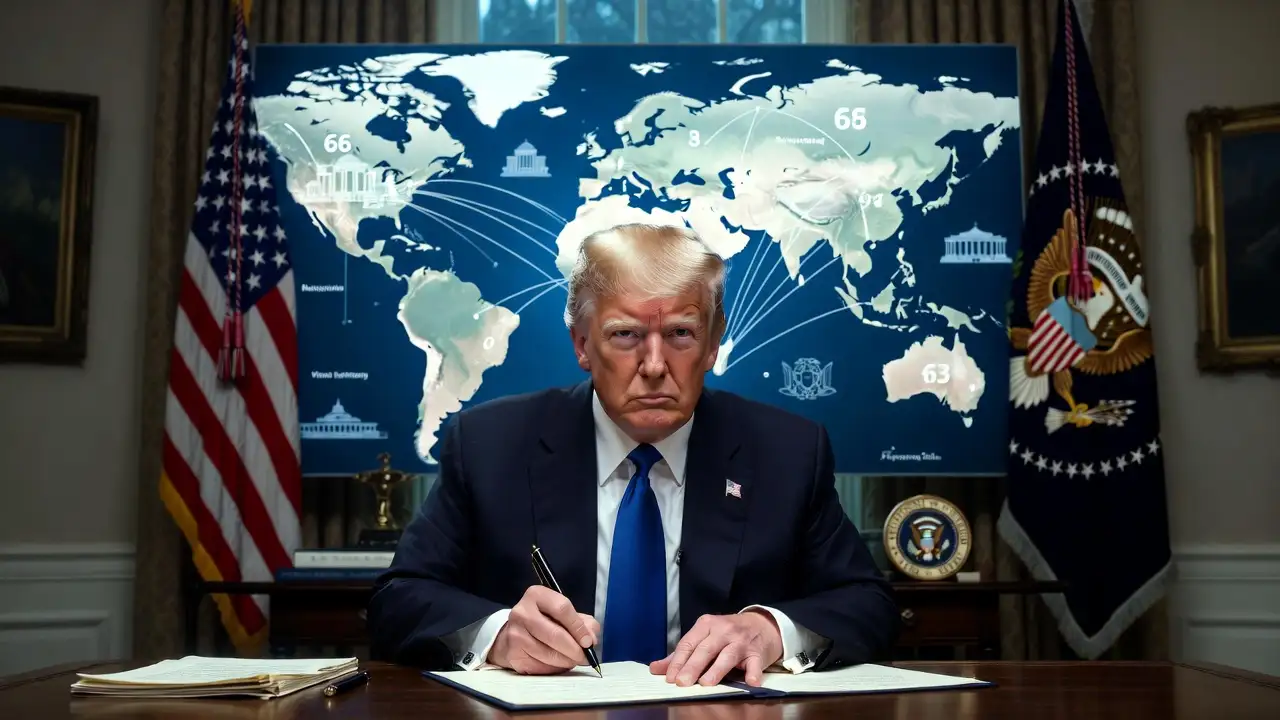


January 7, 2026, will go down in history as the day of the "Great Unloading" of the United States and a shift in global geopolitics. On that day, President Donald Trump signed the Presidential Memorandum "On Restoring National Sovereignty and Reducing Unnecessary International Commitments." It was not just a document but an executive order instructing the State Department and all federal agencies to implement the United States' withdrawal from 66 international institutions and agreements, 31 of which are related to the UN. The memorandum is addressed to the Office of the UN Secretary-General's Special Representative on Violence against Children, the Council of Europe's Venice Commission, the UN Democracy Fund, the UN Conference on Trade and Development, and others. However, two in particular are significant:
• The United Nations Framework Convention on Climate Change (UNFCCC). By withdrawing from it, the United States automatically abandons both the Paris Agreement and all other climate restrictions. This is an "energy liberation" act for the United States, which destroys the legal basis for all climate restrictions. This allows Washington to maximize its own and Venezuelan fossil fuel extraction, sharply reduce the cost of American products in competition with China, and stop allocating billions of dollars to international "green funds. The United States receives "industrial permissiveness" to turn its economic power into an absolute geopolitical weapon, without being accountable to international environmental bodies.
• The United Nations Human Rights Council (UNHRC) and UNESCO: by abandoning these institutions, the United States is finally destroying the moral and cultural frameworks that could restrain its geopolitical expansion. This step frees Washington from "multilateral obligations" to protect human rights and cultural heritage, allowing it to be guided exclusively by its own interests in foreign policy and to protect allies from international criticism. This is a clear message to the world: the US will no longer play by globalist rules in which its power can be bargained for or constrained by votes.
In 2025, Trump banned cooperation with two other major institutions: the International Criminal Court (ICC) and the World Health Organization (WHO). Burning bridges with the ICC is a strategic weapon for the US. By leaving the field of international justice, Washington effectively reserves the right to use force anywhere without fear of future lawsuits: the stronger defines what a crime is.
Washington officially explained the US withdrawal from the WHO and the suspension of funding, citing the WHO as under Beijing's "undue political influence." The Trump administration believes that the US makes disproportionately large payments (about 18% of funding), while China pays 90% less. Withdrawing from the WHO means stopping "wasting American taxpayers' money" on an institution that Washington sees as a tool of China. With this move, the United States also rejects any "global governance" that could impose medical standards or restrictions and seeks to manage its own pharmaceutical market and biological security without interference from international "bureaucrats."
Immediately after the signing of the memorandum, US Secretary of State Marco Rubio issued a statement codifying the US's new "America First" geopolitical credo: "We will not continue to waste resources, diplomatic capital, and resources on institutions that are not aligned with or conflict with our interests. We reject inertia and ideology in favor of prudence and purpose. We seek cooperation where it serves our people, and we will stand up where it does not," Rubio said in his statement.
The US's global "self-isolation" and Rubio's statement have doctrinal significance, which can be broadly divided into three directions of the message.
1. Transition from multilateralism to bilateralism. The US makes it clear that it prefers direct bilateral transactions, such as the TRIPP project in the South Caucasus, gaining access to Ukrainian precious metals, etc., in which the US role is dominant.
2. Legitimization of the right to force: by withdrawing from international conventions, Washington frees itself from the prospect of "international condemnation. This is a clear signal that the US is ready for more aggressive actions, free from UN Security Council constraints.
3. Economic freedom. Refusal to join climate and health agreements allows the US to leverage its full industrial capacity to outcompete China economically.
Doctrinal Turn: Sovereignty vs. Globalism
Washington's withdrawal from 66 international organizations and agreements sounds to many like an obituary for the world order. This is not a chaotic retreat, but a doctrinal assault on the so-called "Interventionist Isolationism" being carried out by the Trump administration. The logic is elementary: US interests and security are at the center, and if there is no obligation to international institutions, then there is no responsibility to protect these interests, even by force.
Why now
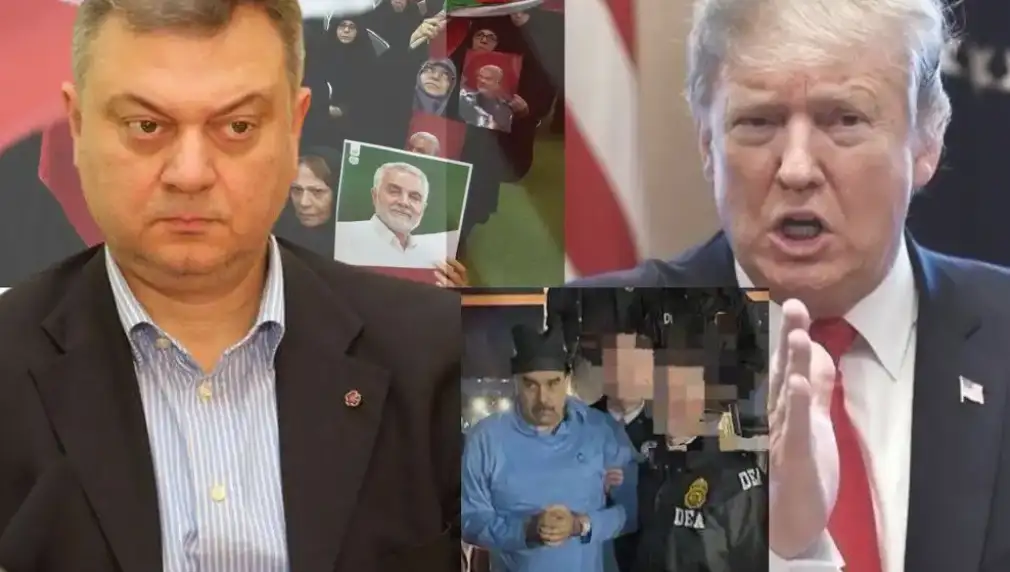
The question arises: why now? The answer lies in the underlying processes unfolding globally, which the US administration assesses as a clear threat to its interests and security. In particular, the primary catalyst for this tectonic shift in the United States was not only China's expanding economic presence in areas the United States traditionally considers its sphere of influence, but also Russia's prolonged aggression in Ukraine, which reaffirmed the complete inefficiency of the old international architecture and international law. In Washington, the situation is assessed as follows: as long as bureaucratic conventions constrain them, the emerging "counter-hegemonic bloc" – the Russia-Iran-China-North Korea-Venezuela-Brazil axis – is unhindered in reshaping the world's economic and political map, also threatening the dollar empire. For the White House, withdrawing from the 66 agreements was a crystallized response to this shadowy alliance. The United States is no longer trying to "restrain" them with paper formulas and diplomatic curtseys. He is taking preventive, authoritarian, and unilateral actions, destroying the alliance's links where it is most vulnerable. And its first and most impressive act was the aggression against Venezuela and the kidnapping of President Maduro.
International reaction: alarm and warnings
The world's reaction was not long in coming. The Chinese Foreign Ministry spokesman described Washington's steps as "unilateral totalitarianism, noting that the US is destroying the foundations on which global stability was based. In Europe, although more restrained, they are talking with alarm about the "transatlantic rift, also taking into account the US's unambiguous threats to withdraw from NATO. However, Washington is no longer interested in all this. The new administration offers a dilemma: the allies must either accept the new American conditions or remain "in the shadow of '66".
South Caucasus. The new effect of the Washington Agreement and TRIPP
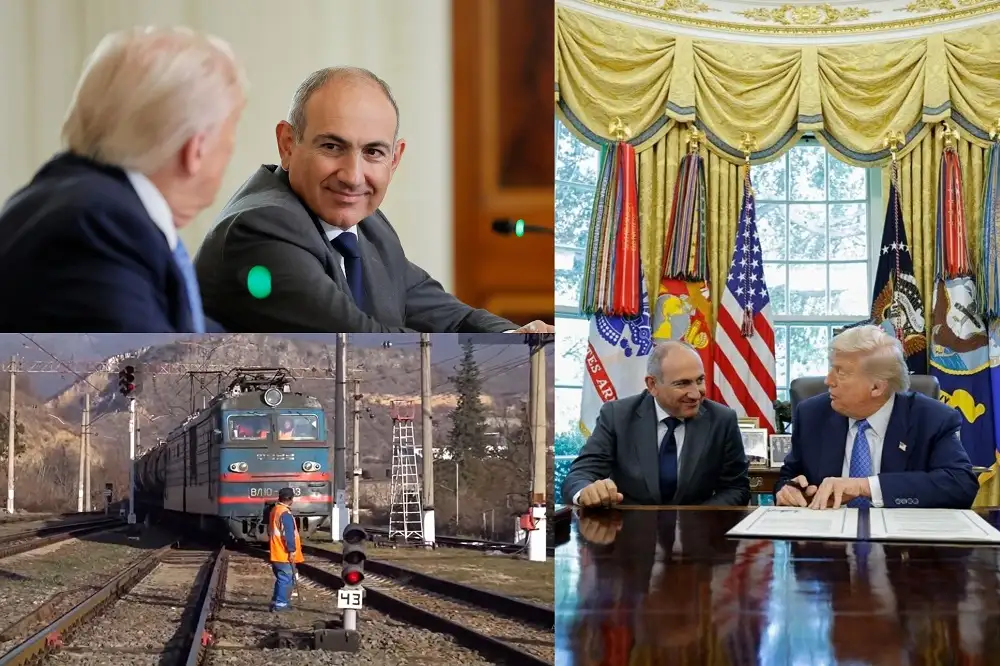
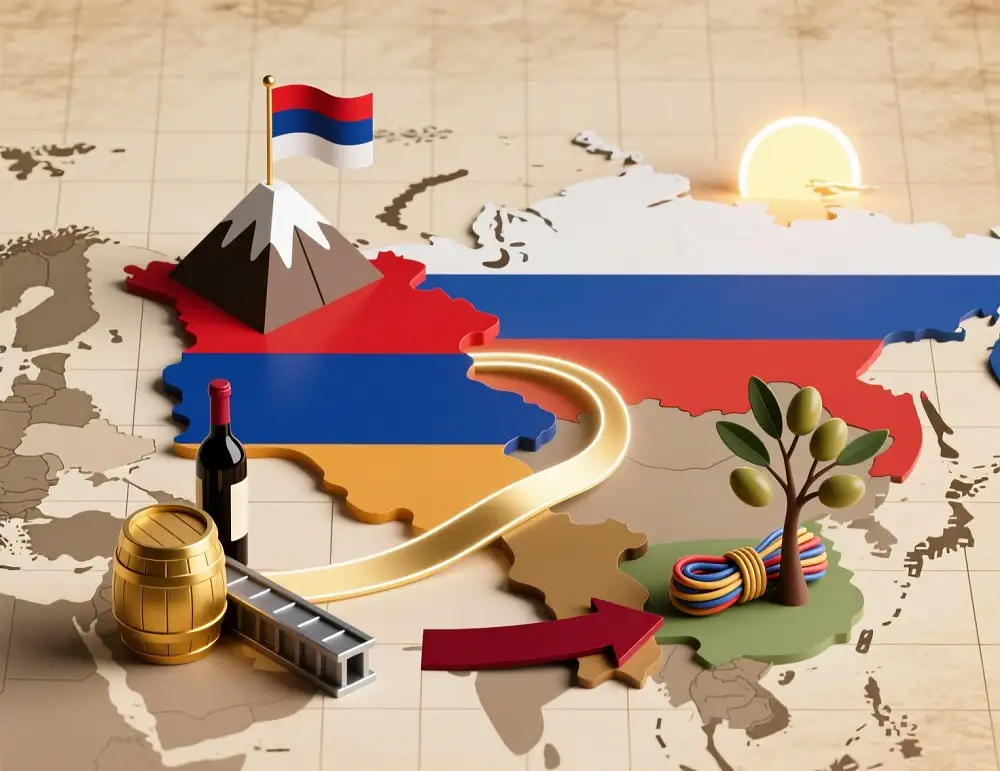
Against the backdrop of this aggressive doctrine, the initialing of the Armenian-Azerbaijani peace agreement in Washington under Trump's auspices in August 2025 and the announcement of the TRIPP project appear in a completely new light.
In 2025, it was a purely diplomatic tactical achievement. In the context of the eventful first ten days of 2026, it takes on new strategic significance in two senses. First, it forces Azerbaijan to make its behavior more predictable. It is now clear that Washington, by imposing this agreement on Azerbaijan, deprives Baku of its maneuvering room. In this sense, TRIPP is not just an economic and communication regional program, but a "geopolitical anchor." Azerbaijan, with its totalitarian regime, getting involved in this American infrastructure project, will also have to remain restrained in games with Russia or Iran, since the US is now showing that it is ready to severely punish those who bypass its interests, especially by playing on the factor of totalitarianism.
Secondly, the TRIPP project is a tool for the US to control the northern gates of Iran and communications passing through northern Iran. If protests in Iran intensify and the US threatens possible intervention, stability in the South Caucasus, on American terms, becomes key. This also deprives Iran of the opportunity to maneuver regionally. On the other hand, it also forces it to seek safety cushions in Moscow and Beijing.
However, international law is being replaced by "transactional security. Those who have signed bilateral agreements with Washington (like Armenia and Azerbaijan in 2025) receive temporary protection. But it will be a defense as long as it serves the US war against the "anti-American shadow alliance" of China, Iran, and Russia.
The world will never be the same again as it was before 2026. The new world order is being drawn up in the Oval Office of the White House and by Washington's harsh decrees. And what happened in Venezuela is happening in Iran; these are only the flowers. The world stands on the threshold of political storms...
Gor Abrahamyan