
Opinion
The Azerbaijani-Iranian imperative of US "expulsion" and the "3+3" pincers
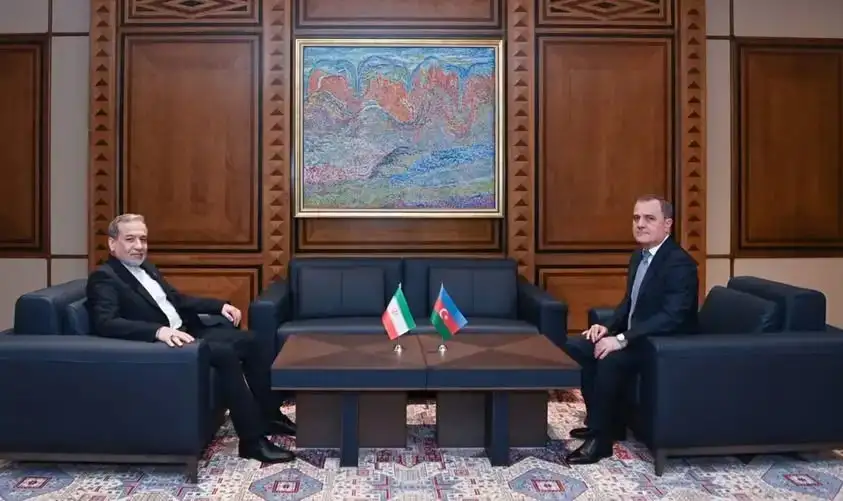


Iranian President Masoud Pezeshkian will visit Kazakhstan and Turkmenistan this week. This underscores Tehran’s interest in the region’s rapidly growing importance in communications. Before that, Iranian Foreign Minister Abbas Araghchi was on a one-day working visit to Azerbaijan, during which he met with President Aliyev and Foreign Minister Bayramov. Araghchi is scheduled to visit Moscow and Minsk next week. This mapping of visits indicates that Iran’s priorities at this stage include balancing relations with countries of the post-Soviet space and the Turkic world, and defining its expectations from the Azerbaijan-Central Asia chain in economic terms.
Iran’s Fears
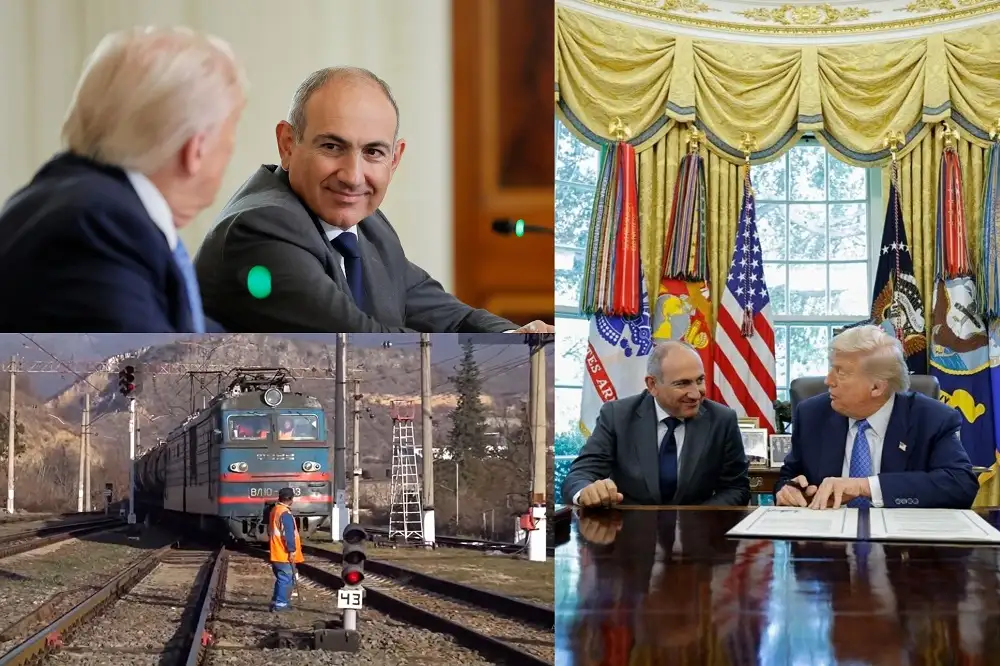
Tehran feels the need to strengthen its role in the rapidly developing architecture of the Middle Corridor. This is due, in particular, to Washington’s undisguised ambitions to take control of the Middle Corridor through the TRIPP transport project, assuming the role of an “influential arbitrator” in the Armenian-Azerbaijani settlement. In this sense, Azerbaijan and the Central Asian countries are gaining exceptional importance for Tehran.
Araghchi’s visit to Baku first of all testifies to the fact that Tehran sees in Baku an opportunity to neutralize Iran’s regional functional limitations in new East-West corridors, despite significant disagreements with Baku. In addition, Azerbaijan continues to be viewed as a key node of the North-South corridor. The political “invasion” of the United States in the South Caucasus through TRIPP, which has disrupted the Russian-Iranian-Turkish hegemonic balance formed over the years, is pushing Tehran more than ever to create a “counterbalancing axis.” In this, Azerbaijan, no matter how paradoxical it may sound, becomes its potential natural ally. It was no coincidence that Araghchi invited Ilham Aliyev to Tehran, given that the Iranian president had already paid an official visit to Azerbaijan twice in 2025.
Iranian motives for the revival of the “3+3.”
In addition, one of the key topics of the negotiations in Baku was the revival of the “3+3” format. The Iranian Foreign Minister stated that the main guarantee of peace in the region is precisely that format, repeating Tehran’s well-known thesis of resolving issues within the framework of regional countries. In turn, Azerbaijani Foreign Minister Bayramov, essentially agreeing with this, stated that they were ready to host the following forum of that format in Baku and were waiting for Yerevan’s positive response, to which the latter, according to Bayramov, had earlier opposed. In other words, the Araghchi-Bayramov tandem in Baku has given the signal to revive the “3+3” format, which was actually “dissolved” by the strategic documents signed in Washington on August 8. And this is not strange.
Although outwardly Iran did not object to the US-sponsored Armenian-Azerbaijani settlement and the formation of the TRIPP transport hub, as well as the sharp increase in US economic and political influence in the region, it is evident that Tehran is not enthusiastic about the new US ambitions to establish control over its communication routes along its northern border, through Armenia and, partly, Azerbaijan, to the north and to Europe. Iran has an urgent task of making this role of the US purely symbolic, that is, depriving it of the prospect of materialization, for which the only practical possibility is perhaps to revive the “3+3” format, to give it a more or less understandable content and, most importantly, to cut it off from the US and the West by involving Yerevan in it. Therefore, it is not excluded that Araghchi may also negotiate in Moscow on this issue, which is equally sensitive from Russia's point of view.
Azerbaijani motives for reviving the “3+3.”
For Azerbaijan, the revival of the “3+3” has another, no less critical meaning, which contradicts the logic of peace derived from the Washington declarations. Baku believes that, through Trump’s involvement, it has received the most crucial thing from Washington: guaranteed uninterrupted road and rail communication with Nakhichevan, from which Armenia has no way out. But Baku is absolutely not interested in a long-term and influential US presence in the South Caucasus, since it deprives them of three factors. First, to talk to Armenia from a position of strength and continue to extract concessions with the threat of war. If the US launches mechanisms to protect its interests here, Washington will exclude any attempt at destabilization. Second, to position itself as a regional leader. With the US presence, Azerbaijan becomes a regional player of the same scale as Georgia and Armenia, which does not fit into Aliyev’s plans at all. And third, to limit Turkey’s regional role. Before, the US ensured its presence in the region through Turkey; now, this presence is direct, and Washington will be less dependent on Ankara. In such conditions, it will automatically moderate
And also Turkey's appetite for expansion to the east. And the moderation of Turkey's influence is directly proportional to the moderation of Azerbaijan's ambitions.
"American Moor" and the Armenian choice
In this sense, the logic of Azerbaijan's American political path boils down to the famous Shakespearean formula: "The Moor has done his dirty work, the Moor must go." Its practical way is... the revival of "3+3", and with a new breath and a tangible, "pincer" toolkit for Armenia.
If we take into account that, except for Armenia and, partly, Georgia, virtually all large and small regional players are hindered by the growing presence of the United States, it must be assumed that pressure on Yerevan may increase in the near future to drag it into the suffocating swamp of "3+3". And Yerevan's main task is to prevent US-Armenia cooperation from becoming a variable quantity.
Gor Abrahamyan