
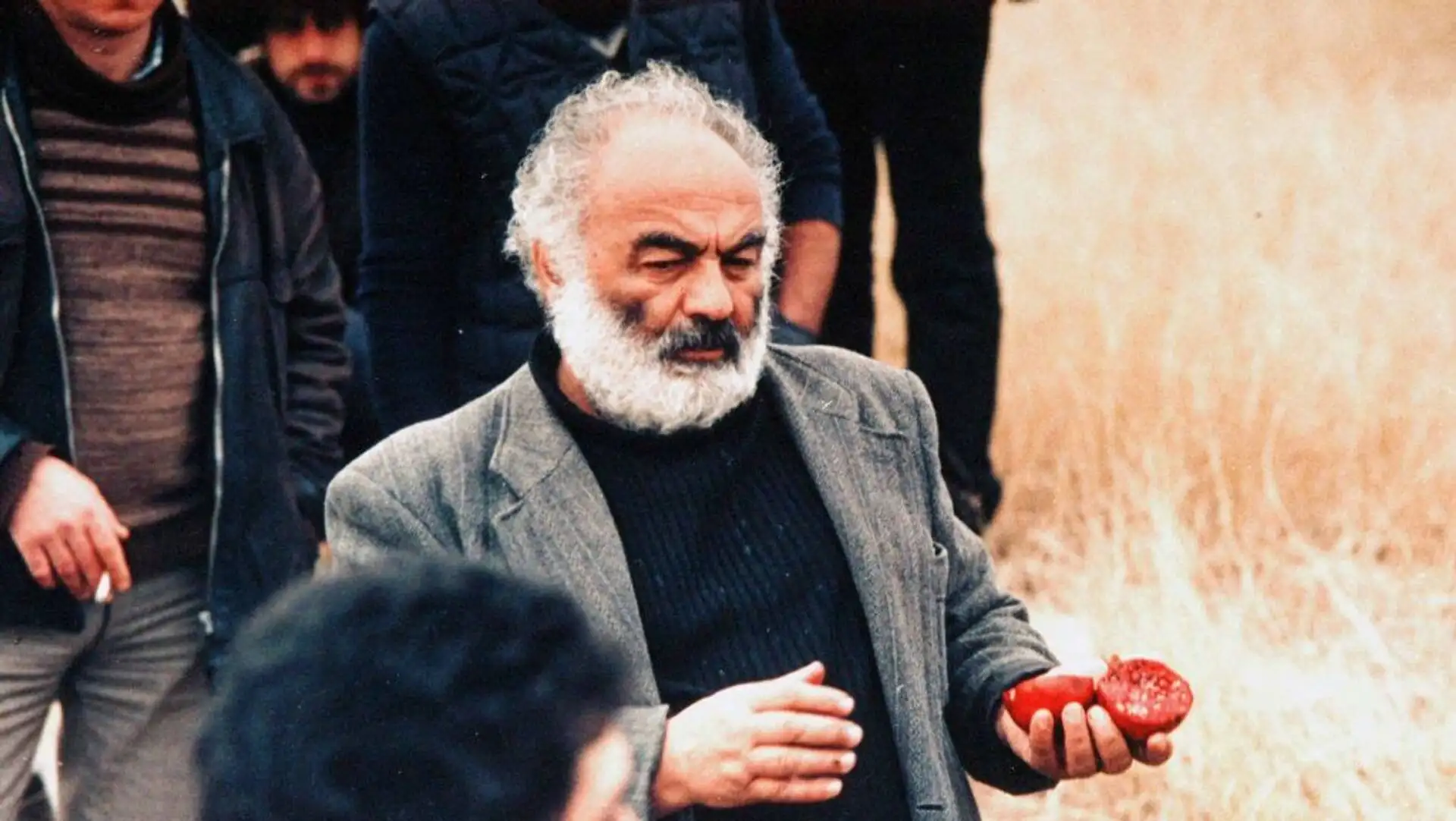


Today is the 102nd birthday of the famous film director and screenwriter Sergey Parajanov.
Sergey Parajanov was one of the most unusual and original personalities in the history of world cinema. He was not only one of the outstanding film directors of the Soviet Union, but also an artist in a broad sense, whose creative thinking was not limited to cinema. Parajanov's art was nourished by esotericism, folk traditions, national memory, and symbolic images, which made his films into visual poetry. This exceptional aesthetic brought him international recognition.
Parajanov was born in Tiflis (present-day Tbilisi) to an Armenian family. His childhood and youth were spent in a multicultural environment, which left a deep mark on his worldview. Initially, he produced several feature-length and documentary films that did not stand out significantly from the general flow of Soviet cinema. However, the film "Shadows of Forgotten Ancestors, shot in 1964, became a turning point, instantly making Parajanov one of the innovative figures of world cinema.
It was after this recognition that the most difficult trials of his life began. Parajanov did not reconcile himself to Soviet ideological restrictions and criticized the authorities both openly and through art, creating works full of subtext. In 1965, he began working on the anti-war film "Kyiv Frescoes, which was soon banned. In 1966, Parajanov was invited to Armenia, where he enthusiastically began filming "Sayat-Nova".
This film, released under the title "The Color of the Pomegranate," tells the story of the life and inner world of the great Armenian ashugh Sayat-Nova, not through traditional biographical accounts, but through symbolic imagery. The film was full of scenes expressive of Armenian culture, ritual thinking, and national identity. However, this very originality was the reason why Soviet censorship harshly intervened in the film, subjecting it to heavy editing. As a result, the audience was presented with only a distorted version of the author's idea, and Parajanov was removed from cinema for many years.
In the 1970s, he was arrested and convicted, accused of various, often fabricated, crimes. Parajanov spent four years in the gulag. Even in prison, he did not stop creating: forced to sew sacks, he made dolls and collages from excess rags. In one of these works, he depicted the Egyptian pharaoh Tutankhamun, another testament to his inexhaustible creative imagination.
After his release, Parajanov lived for a long time in difficult material and psychological conditions, which was humiliating for an artist of such a scale. Only with the support of old friends and supporters was he able to return to the cinema. In the last years of his life, he managed to shoot two more significant films: "The Legend of Suram Fortress" and "Ashugh Gharib", which became a worthy end to his creative path.
Sergey Parajanov's life was as dramatic as his art. He remained a symbol of a free-thinking artist, a man who, even under pressure and imprisonment, did not betray his creative freedom.